

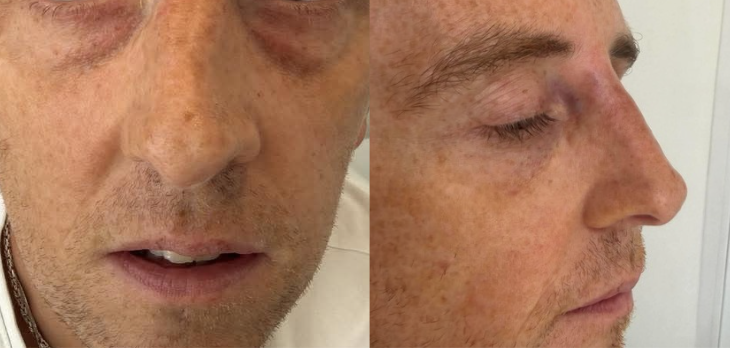
When Liam came to see us, he had two concerns some might assume would need surgery to fix. His nose had been broken in the past and never quite sat straight, and the skin under his eyes was showing the tired, hollow look that comes with age and stress. Like a lot of our clients, he didn’t realise there was a non-surgical route to addressing both.
This case study walks through Liam’s journey with us, the treatments involved, and why more men are choosing non-surgical options at our Plymouth clinic.
The Starting Point
A broken nose can leave a visible bump, dip or asymmetry long after the injury itself has healed. Traditionally, correcting this has meant rhinoplasty surgery: general anaesthetic, a recovery period of weeks, and a level of commitment many people simply don’t want for what is, in Liam’s case, a cosmetic irregularity rather than a functional issue.
At the same time, Liam had noticed his under-eye area looking increasingly tired, with fine lines and a loss of the smooth, hydrated skin he remembered having in his twenties. It’s one of the most common concerns we see from both male and female clients, and it’s also one of the areas people assume can’t be treated without more invasive intervention.
Straightening the Nose Without Surgery
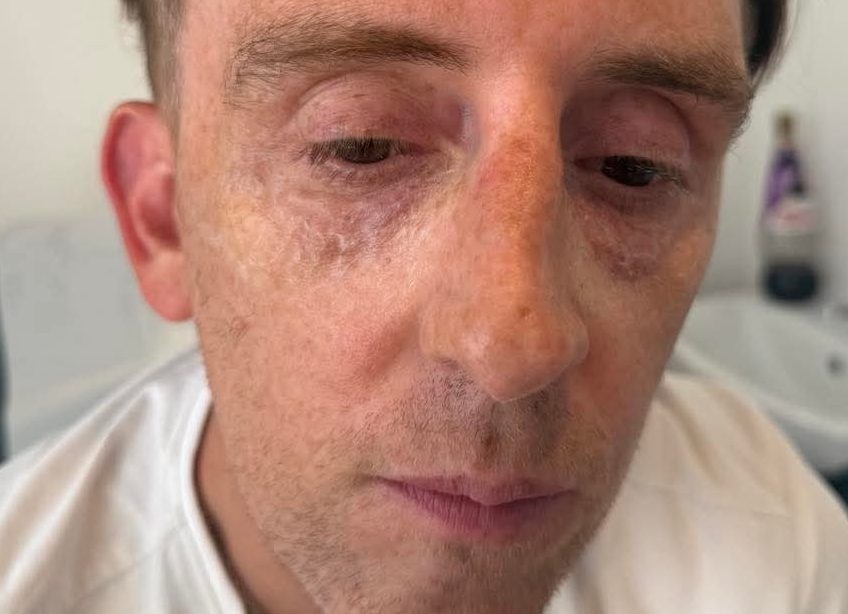
Instead of surgical rhinoplasty, Liam opted for our liquid rhinoplasty treatment, using dermal filler to reshape and contour the nose. The technique is well established for correcting a dorsal hump, a drooping tip or an uneven bridge, and it works by carefully injecting filler to smooth and balance the nose’s profile.
For Liam, this meant no incisions, no broken and reset bone, and no lengthy recovery. The whole procedure took under an hour, and he was back to his normal routine the same day, following our usual aftercare guidance around avoiding pressure on the area and steering clear of strenuous exercise for a short period afterwards.
You can read more about how this treatment works, who it suits and how long results typically last in our full guide to liquid rhinoplasty in Plymouth.
Rejuvenating the Under-Eye Area with Polynucleotides
For his under-eye concerns, Liam had polynucleotide treatment. Polynucleotides are naturally occurring molecules derived from DNA, used in regenerative medicine for their ability to support tissue repair, boost hydration and encourage the skin’s own collagen and elastin production.
Unlike a filler, polynucleotides don’t add volume. Instead, they work at a cellular level to improve the quality of the skin itself, which makes them particularly well suited to an area as delicate and thin-skinned as under the eyes. Over a course of sessions, this can lead to a visible reduction in fine lines, improved skin texture and a brighter, less tired-looking appearance.
We’ve written in more depth about how the treatment works and what to expect in our guide to polynucleotide treatment for under-eye rejuvenation.
The Result
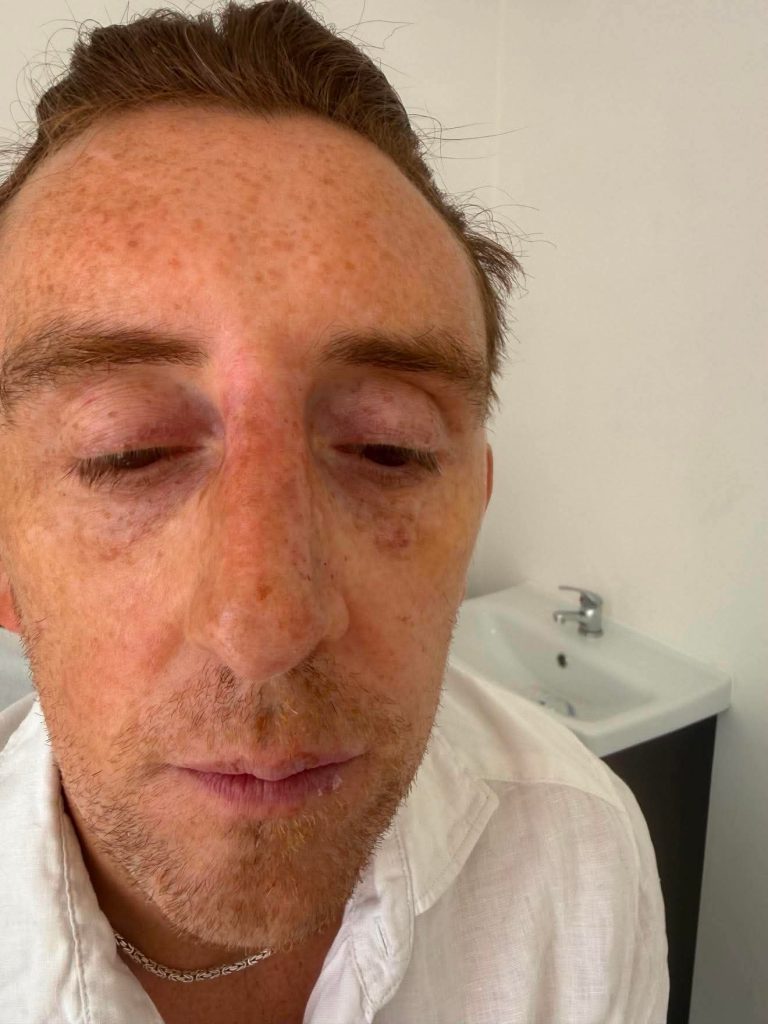
Combining the two treatments gave Liam a more balanced, refreshed look without a single surgical procedure between them. The nose sits straighter and more even, while the under-eye area looks noticeably more rested. Just as importantly, there was no downtime to plan around and no lengthy recovery to factor into his working week.
It’s a great example of what’s possible when non-surgical aesthetic treatments are used thoughtfully together, and why an increasing number of men are exploring these options rather than ruling themselves out because they assume surgery is the only answer.
Not Just for Women
Treatments like these are sometimes still seen as the preserve of female clients, but that’s changing. We see men across Plymouth and further afield for everything from nose reshaping and under-eye rejuvenation to anti-wrinkle treatments and skin boosters. Every treatment plan starts with a thorough consultation and medical history check, so whatever your starting point, we can talk through what’s realistic and what suits you.
Visiting Us From Outside Plymouth
While the majority of our clients are based in and around Plymouth, we welcome people from further afield who are happy to travel for the right practitioner. If you’re considering a similar journey to Liam’s, whether that’s addressing an old nasal injury, tackling tired-looking eyes, or both, we’d recommend starting with a consultation so we can assess your individual concerns and talk through the options.
To find out more or to book a consultation, give Nicky a call on 07979 844702.
Frequently Asked Questions
Is this treatment only for people with a broken nose?
No. While Liam’s case involved correcting the effects of a previous break, liquid rhinoplasty is just as commonly used to smooth a dorsal hump, correct a drooping tip or balance a naturally uneven nose. A consultation will confirm whether it’s the right approach for your concern.
Does polynucleotide treatment hurt?
Most clients find it well tolerated. You may feel a slight pinching or pressure sensation during injection, and mild redness, swelling or minor bruising can occur afterwards, usually settling within a few days.
How many sessions will I need?
This varies from person to person and is something we’ll discuss at your consultation. Polynucleotide treatment for the under-eye area typically works best as a course of sessions rather than a single visit, with maintenance treatments recommended periodically to sustain results.
Is liquid rhinoplasty permanent?
No, the results are temporary, which is one of the reasons many clients prefer it to surgery. It gives you the chance to see how you feel about the change before committing to anything permanent, and top-up treatments can be arranged as and when needed.
Can these treatments be combined, like Liam’s were?
Yes. Many clients choose to combine treatments as part of a wider plan, as long as each is suitable for their individual medical history and goals. This will always be assessed during your consultation.
Do I need to be a certain age to have these treatments?
No specific age requirement applies, though all clients are required to complete a medical history form beforehand so we can check suitability.
Will anyone be able to tell I’ve had work done?
The aim of both treatments is a natural, balanced result rather than an obvious change. Polynucleotides in particular work on skin quality rather than adding volume, so the result tends to read as “well rested” rather than “treated.”
How do I know if I’m suitable?
The best way to find out is a consultation, where we’ll talk through your concerns, check your medical history and advise honestly on whether these treatments are right for you.
Comments are closed